Fashion techclothink
AI in the Fashion Industry: What Actually Works in 2026 (8 Real Uses)
- Product development

AI in the fashion industry spans the full product lifecycle: trend and demand forecasting, garment design, digital sampling, tech pack drafting, supply-chain planning, merchandising, personalisation and virtual try-on. In 2026 the biggest proven gains sit in forecasting, product development and personalisation — not runway spectacle.
This guide is written for brand founders, product developers and apparel teams deciding where AI is worth real budget — not for anyone chasing a demo reel. It maps eight practical uses with attributed evidence, shows how product-development teams can adopt AI without a transformation programme, and explains where a connected workspace like clothink fits.
In brief
- McKinsey projects generative AI could add $150–275B to apparel, fashion and luxury operating profits over 3–5 years — a projection, not cash already booked.
- State of Fashion 2026 (McKinsey / Business of Fashion): more than 35% of fashion executives already use generative AI for routine functions such as customer service, image creation, copywriting and product discovery.
- McKinsey’s cross-industry AI research estimates demand-forecast error reductions of roughly 20–50% in well-run supply-chain deployments, with inventory reductions in a similar range.
- Most pilots still stall: data quality, process ownership and named human approvals decide whether a demo becomes an operating system.
In this guide
- What does AI in fashion actually mean?
- 1. Trend and demand forecasting
- 2. Concept and garment design
- 3. Digital sampling: CAD to photoreal
- 4. Tech packs, BOMs and construction notes
- 5. Sourcing, supply chain and quality control
- 6. Inventory, pricing and merchandising
- 7. Personalisation and virtual try-on
- 8. Marketing content and product copy
- The eight uses side by side
- Where clothink focuses: concept to production
- Benefits, risks and what AI does not replace
- How to adopt AI as a small fashion brand
- Frequently asked questions
What does AI in fashion actually mean?
“AI in fashion” is not one product. Three families of tools show up in most real deployments:
- Generative AI — drafts media and text: concepts, mockups, product copy, construction-note first drafts.
- Predictive machine learning — forecasts demand, markdown timing, returns risk and size recommendation.
- Computer vision — tags products, inspects quality, powers visual search and virtual try-on.
In The State of Fashion 2026, executives rank AI as the industry’s biggest opportunity. That does not mean every use case is equally mature. Image and copy tools scale quickly; forecasting and supply-chain systems need clean data; factory-facing specs still need a human who owns the export.
1. Trend and demand forecasting
Getting the buy wrong is still one of the most expensive mistakes in apparel. AI forecasting systems combine sales history, seasonality, promotions and sometimes weather or search signals to estimate demand at SKU, size and location grain — then feed replenishment and open-to-buy (the seasonal buy budget).

The benchmark numbers here come from McKinsey’s cross-industry research Smartening up with Artificial Intelligence — not a fashion-only study — which estimated forecasting-error reductions of about 20–50% and inventory reductions of 20–50% in well-run supply-chain deployments. Treat those as ceilings, not a first-pilot guarantee: apparel’s short seasons and long lead times make forecasting harder than in most categories.
- Buyers still set risk appetite, open-to-buy and assortment strategy.
- Where it breaks: weak master data or siloed POS feeds produce confident wrong forecasts.
2. Concept and garment design
When the blank page is the bottleneck, generative tools help teams explore silhouettes, colourways and references faster, provided brand guardrails exist. Without them, outputs look generic and burn review time. In clothink, Enhance and the Assistant use your brands, styles and recent work, so suggestions fit what you make.

State of Fashion 2026 reports more than 35% of fashion executives already use generative AI for routine functions such as customer service, image creation, copywriting and product discovery. Separately, McKinsey’s Generative AI: Unlocking the future of fashion analysis projected $150–275 billion in additional operating profit for apparel, fashion and luxury over three to five years — potential value, not realised totals.
- Humans still choose taste, brand fit and which concepts deserve sample budget.
- Where it breaks: without palette and style constraints, exploration homogenises.
3. Digital sampling: CAD to photoreal
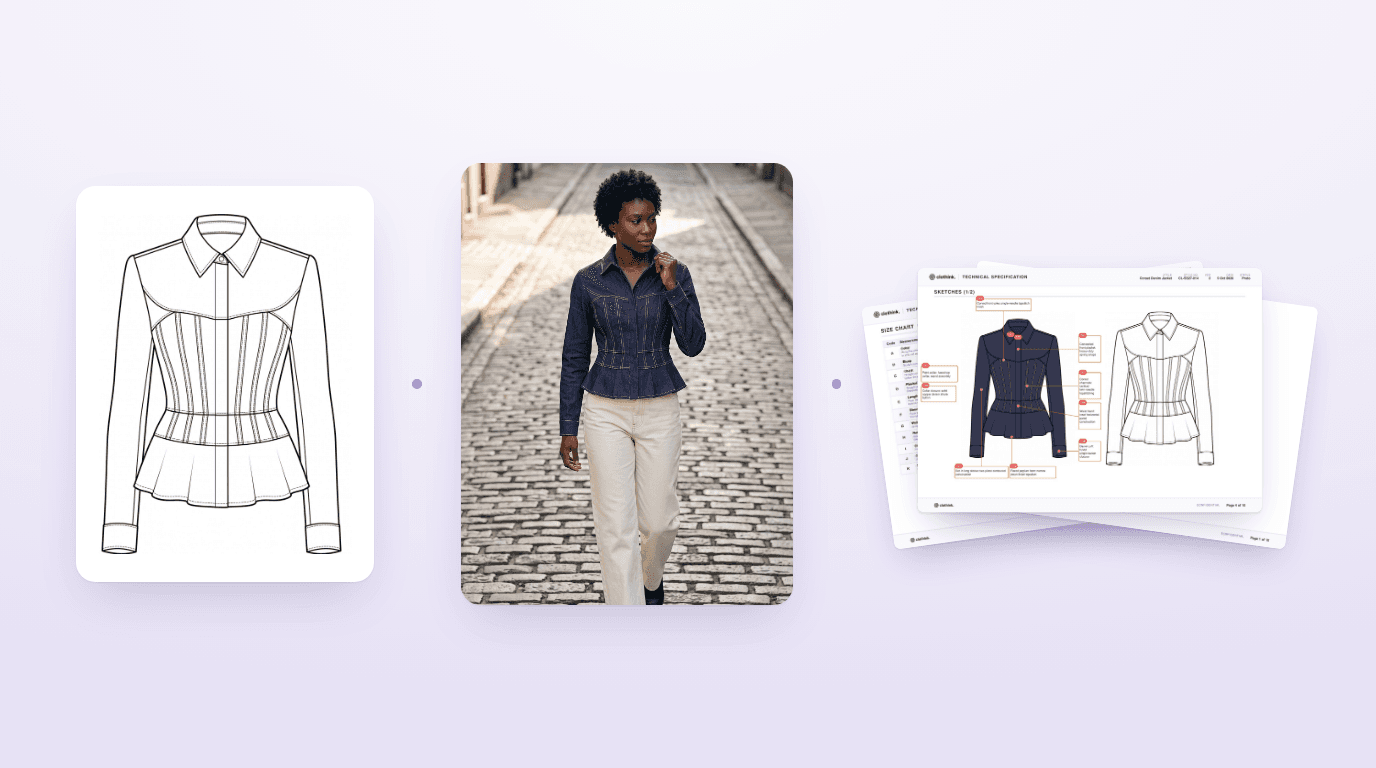
Once a concept is chosen, the next expensive step is physical sampling — and this is where digital tools pay back fastest. Turning a CAD or sketch into a photoreal mockup lets you kill weak colourways and proportions before you cut fabric; it earns buy-in from buyers and clarity from suppliers, without pretending to replace fit approval on real bodies.
- Fewer “wrong colour” and “wrong proportion” sample rounds.
- Where it breaks: photoreal from flats does not simulate drape physics when you need true pattern engineering.
For the CAD → photoreal workflow in practice, see AI fashion mockup generator.
4. Tech packs, BOMs and construction notes
A mockup wins buy-in, but a factory quotes from a specification. The tech pack — technical flat, bill of materials, graded size chart, construction notes — is where AI saves product developers the most hours, because most of that document is assembly work rather than design decisions. AI that drafts fabric rows, BOM lines and construction notes from garment context gives you a populated first draft instead of a blank template.
A first-hand lesson from building clothink’s AI chain: isolated generation — one prompt, one section — drifts. Cascading context, where the materials and colours inform the BOM and the BOM informs the construction notes, produces drafts a factory can work from after review. The model will still invent stitch types and trim codes if you skip review, which is why every field stays editable.
- Faster first-quote conversations; fewer incomplete-pack loops.
- Where it breaks: skipping human review of materials, placements and tolerances.
Step-by-step: What Is an AI Tech Pack?.
5. Sourcing, supply chain and quality control
Once a style is ready to make, the hard problems shift to who manufactures it, whether materials arrive on time, and whether finished goods leave the factory without defects. At retailer and large-brand scale, AI is used to score supplier risk, predict logistics delays earlier, and run computer vision on production lines for defect detection — work that used to depend entirely on planner judgement and end-of-line human inspection.

Independent brands rarely buy a custom supplier-risk or factory-vision stack. Their practical version of the same pressure is upstream: complete, unambiguous specs that cut factory queries, fewer rush shipments caused by incomplete packs, and clearer QC call outs before production starts. Commercial terms, ethical sourcing and on-ground QC relationships stay human either way.
- Where it breaks: models trained on incomplete supplier history amplify bias in that history.
- Where it breaks: vision QC still needs labelled defect libraries and someone who owns the reject decision.
6. Inventory, pricing and merchandising
Once product is in market, the question shifts from “can we make it?” to “what do we replenish, what do we mark down, and when?”. Markdown optimisation and assortment tools analyse sell-through, remaining season and competitive pricing — decisions merchandising teams historically made inconsistently in spreadsheets, style by style. McKinsey’s Generative AI: Unlocking the future of fashion analysis flags pricing and markdown optimisation among the nearer-term value pools for apparel, fashion and luxury — again as projected operating-profit opportunity, not cash already booked.
- Better full-price sell-through when discount timing is data-led rather than panic-led.
- Where it breaks: dirty POS and inventory feeds — garbage in still means garbage out.
7. Personalisation and virtual try-on
The same shift reaches the shopper. Customer-facing AI personalises discovery, recommends size and lets people try garments digitally before checkout — attacking the “will this fit me?” uncertainty behind many online fashion returns.

Most published evidence on try-on comes from the companies that sell it, so test it on your own range before relying on it.
- Protect brand voice in recommendations; get consent for body-related data.
- Where it breaks: try-on cannot convey stretch, hand-feel or complex construction.
8. Marketing content and product copy
Finally, the most widely adopted use: content. GenAI drafts product descriptions, campaign variants and social assets at catalogue scale, then feeds ad platforms that test creative continuously. State of Fashion 2026 reports that image creation, copywriting and related routine creative work are already among the generative AI uses fashion executives have put into practice — which matches what most teams feel first: speed. The downside is homogenised brand language, and unsupported fibre or sustainability claims, if nobody edits before publishing.
- Faster content cycles and more paid-media tests per week.
- Where it breaks: nobody owns voice, claims substantiation and campaign taste.
The eight uses side by side
| Use | Who it helps most | Maturity | Where it breaks |
|---|---|---|---|
| 1. Trend and demand forecasting | Buyers and planners with clean sales history | Proven in well-run deployments; the 20–50% ranges are ceilings | Weak master data or siloed POS feeds |
| 2. Concept and garment design | Designers and founders facing a blank page | Widely used | Generic output without palette and style constraints |
| 3. Digital sampling | Teams approving colour and proportion before sampling | Ready for visual approval, not fit | No drape physics or pattern engineering |
| 4. Tech packs, BOMs and construction notes | Product developers and small brands without a technical designer | Useful first drafts | Skipping human review of materials, placements and tolerances |
| 5. Sourcing, supply chain and QC | Retailers and large brands | Mostly at large-brand scale | Incomplete supplier history; no labelled defect library |
| 6. Inventory, pricing and merchandising | Merchandising teams with sell-through data | Projected value, not yet booked | Dirty POS and inventory feeds |
| 7. Personalisation and virtual try-on | E-commerce teams | Growing; evidence is mostly vendor data | Cannot convey stretch, hand-feel or complex construction |
| 8. Marketing content and product copy | Content and e-commerce teams | The most widely adopted use | Nobody owns voice, claims and taste |
Where clothink focuses: concept to production
clothink is an AI-powered product development workspace for fashion brands, designers and apparel teams. It covers the stretch of the map above where independent brands lose the most time and money: taking a design from first concept to a tech pack that is factory-ready after review, in one place, instead of scattering it across a vector editor, a mockup app and a spreadsheet.
You can sketch garment concepts, technical flats and colour palettes, then turn a sketch, a CAD or just a description into photoreal mockups, on a Model or as a ghost-mannequin shot. Brands in clothink organise styles and tech packs, and supply the logo and colours for white-label exports. Auto-Complete then drafts the tech pack: BOM, graded size chart, construction notes, How to Measure guide and call outs, every field editable, exported as a branded PDF and Excel file after review.
The point is that the CAD, the mockup and the spec all live against the same garment, so nobody is reconciling three different versions across a design app, a chat thread and a spreadsheet. AI does the assembly work; a human signs off every export.
CAD to mockup demo
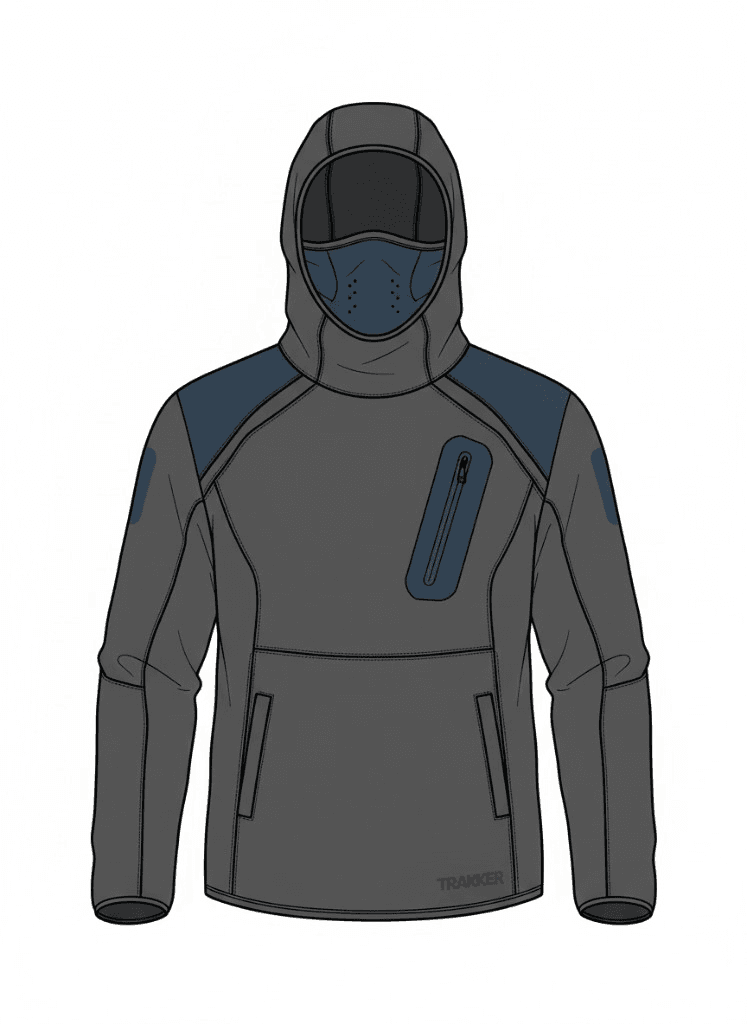
CAD flat
Awaiting render
Photoreal mockup
Tech pack workspace
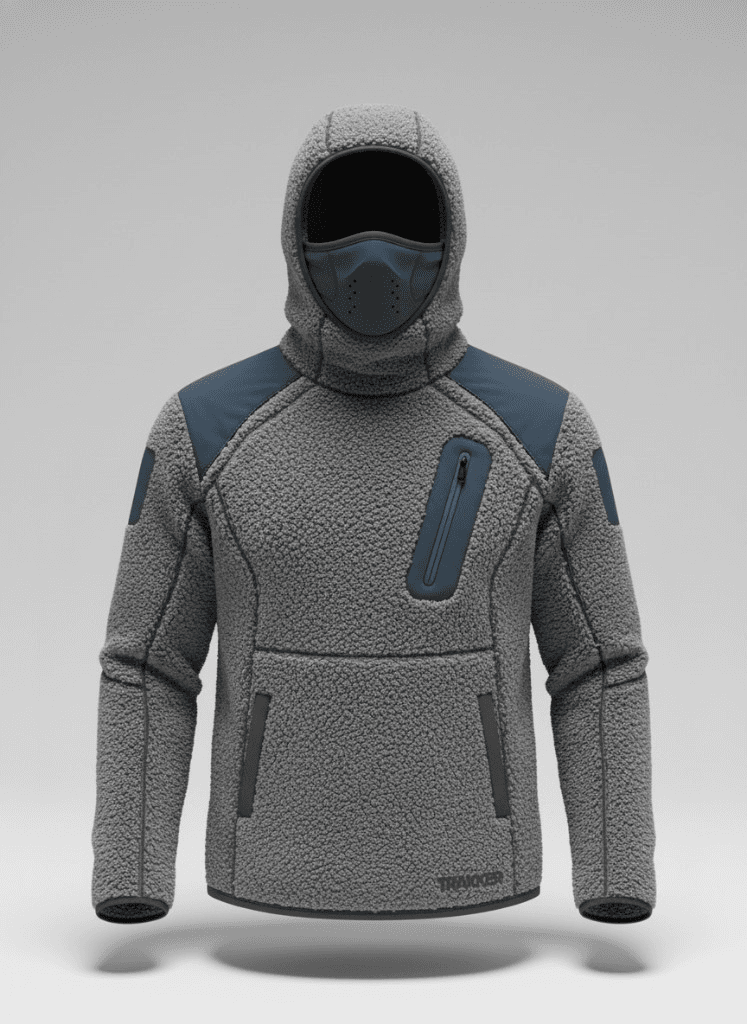
Approved mockup
Style Information
Style code
HDY-SS26-05
Style name
Sherpa Fleece Hoodie
Product
Hoodie
Season
SS26
Fit
Relaxed
For the full step-by-step workflow, read What Is an AI Tech Pack?.
Benefits, risks and what AI does not replace
Benefits when AI is deployed honestly
- Faster iteration — more concepts and colourways reviewed before sampling.
- Fewer manual handoffs between CAD, mockup, BOM and PDF.
- Earlier validation — kill weak ideas digitally before physical proto.
- Consistency — one garment file beats three conflicting exports scattered across apps.
Risks to plan for
- Hallucinated specs — confident wrong stitch types, compositions or trim codes.
- IP and training-data questions — know what your vendor claims about ownership.
- Bias and data readiness — garbage master data produces garbage recommendations.
- Brand homogenisation — generic aesthetics without guardrails.
- Pilot-to-scale failure — demos that never get process ownership.
What AI does not replace
- Fit approval on real bodies.
- Legal and compliance sign-off — fibre claims, care labels, market regulations.
- Final costing and negotiation.
- Supplier relationships and QC on the ground.
How to adopt AI as a small fashion brand
You do not need a strategy deck or a new department. If you are a founder or a small team, the goal is simply to take one job that currently costs you time or money and see whether AI does it faster without making the result worse. Start narrow, keep a human in charge, and only expand once it clearly works.
- Pick one expensive problem — too many sample rounds, packs the factory keeps sending back, or colourway decisions that drag on for weeks.
- Write down the current cost before you change anything — how many samples, how long a quote takes, how many revision emails. That is the number you are trying to beat.
- Keep everything for a garment in one place — its CAD, mockup and spec together, not spread across screenshots, chat threads and separate files.
- Have someone check the AI’s work before it leaves the building — read the fabric, measurements and construction notes before any PDF goes to a factory.
- Prove it on a few styles first, then do more — once the faster way clearly beats your old number, roll it out across the rest of your range.
Frequently asked questions
How is AI used in the fashion industry?
Across the lifecycle: forecasting, design exploration, digital sampling, tech pack drafting, supply-chain planning, merchandising, personalisation, virtual try-on and marketing content.
What are real examples of AI in fashion?
Demand-forecast engines that cut forecast error; generative concept tools with brand guardrails; CAD-to-photoreal mockups; AI-drafted BOM and construction notes; computer-vision catalogue and QC tools; size recommendation; and virtual try-on.
Will AI replace fashion designers?
No. AI expands how many directions you can evaluate and removes repetitive assembly work. Design judgement, brand taste, fit sign-off and commercial decisions remain human.
What are the risks of AI in fashion?
Hallucinated specifications, weak data producing bad forecasts, IP uncertainty, biased recommendations, brand-voice homogenisation, and pilots that never scale because ownership was never defined.
Can AI create factory-ready tech packs?
AI can create a strong first draft from garment context, but factory-ready still means human review of materials, placements, tolerances and claims before you export PDF or request a quote.
Sources
Figures in this guide come from the original publishers, re-checked 14 October 2026: McKinsey and The Business of Fashion, The State of Fashion 2026; McKinsey, Generative AI: Unlocking the future of fashion; McKinsey, Smartening up with Artificial Intelligence.
Where clothink fits
- Concept to factory in one place. Sketches, mockups and the tech pack share one style, so nothing is rebuilt.
- Mockups without a sketch. Start from a sketch, a CAD or a written description.
- Drafts you check. Auto-Complete drafts the BOM, size chart, construction notes, How to Measure guide and call outs, and every field stays editable.
- AI that knows your range. Enhance and the Assistant use your brands, styles and recent work.
- Free to start. The Free plan needs no card and includes 10 starter tokens; paid plans start at £19 a month.
AI that serves the factory handoff
Concepts, photoreal mockups, and editable tech pack drafts in one clothink workspace — with you in control of every export.