Tech packsclothink
How to Write a Tech Pack Factories Will Actually Quote From
- Product development

When a factory goes quiet after you send a pack, they are usually not busy. They are pricing risk. Vague fabric, an incomplete size grade, or materials they cannot name cleanly force guesswork. Guesswork shows up as inflated quotes, delayed replies, or a polite request to resubmit.
Sending a tech pack does not automatically mean they have enough to give you a reliable price. The goal is not the longest pack. It is to remove the uncertainties that actually move cost. This guide is written from the factory side of the table: what drives a quote, what belongs in the RFQ versus the pack, and the quote-ready floor before you expect a sample PO.
For the full AI-assisted workflow, see What Is an AI Tech Pack?. To compare workspace options, read our guide to the best tech pack software for fashion brands. For how tech-pack AI sits among broader industry uses, see AI in the fashion industry: what actually works.
Pack versus RFQ
A meaningful quotation needs five answers: what the garment is, what it is made from, how it is constructed, how many units you expect, and which commercial and quality requirements apply. The tech pack should answer the first three. Your request for quotation (RFQ) should answer the last two.
That split matters. Even a technically detailed pack produces a misleading price when it arrives without quantities, delivery expectations, or testing. State the first-order quantity you genuinely expect (by style and colour, with size ratio where you know it), not a vague “1,000 to 5,000” ambition. Ask the factory to show price breaks separately.
- Estimated order quantity by style and colourway.
- Intended size range and expected size breakdown or ratio.
- Target delivery or ex-factory date, the Incoterms® rule you want (for example FOB, FCA or DDP), and whether you want a CMT or full-package price.
- Sample stages, testing or certification, and whether materials are nominated or factory-sourced.
- Target price only when you have a realistic commercial number.
What actually drives a quote
A production manager rarely reads your pack front to back on the first pass. They jump to the sections that determine material cost, labour, and processing: fabric, BOM, graded size run, prints or washes, packaging, and compliance where it applies. Style codes and season labels matter for filing, but they do not move the price.
- Main fabric with composition, weight, width, and finish, not “technical shell” or “cotton jersey” without gsm.
- BOM with every major material named (shell, lining, interlining, trims, labels) with type, composition or spec, and colour/code where relevant.
- Size range and ratio for the buy you are costing. Factories use the grade and distribution to calculate consumption.
- Construction call outs for seams, closures, and specialist processes: anything that changes labour or machinery.
- Decorative processes written into the pack (prints, embroidery, washes), not left for the factory to infer from a reference image.
Factories usually fill in consumption themselves from the graded chart, fabric width, and flat. Empty qty cells on a client BOM are normal at RFQ.
Quote-ready, sample-ready, bulk-ready
One pack does not need to answer every production question on day one. Make clear what is confirmed, what is provisional, and which assumptions the factory should use for costing.
| Stage | What must be confirmed | What can stay TBC |
|---|---|---|
| Quote-ready | Garment and main fabric spec (or a target spec), BOM materials named, size range and ratio, quantity, Incoterms® rule | Some colours, trim suppliers and packaging, as long as the costing assumption is stated |
| Sample-ready | Base-size measurements, clear construction, artwork dimensions, material direction and a How to Measure guide | Full grade, bulk packaging, and colours still waiting on a lab dip |
| Bulk-ready | Approved graded measurements, tolerances, materials, colours, labels, packaging, testing and every sampling change | Nothing that changes the product |
What usually triggers a follow-up
These gaps do not always kill a quote, but they usually mean email back-and-forth or padded contingency before you get a number you can trust:
- BOM gaps or flat contradictions: trims, lining, or components visible on the flat but missing from the BOM (or left blank without TBC).
- Fabric described visually: “premium”, “soft”, “heavyweight” without measurable composition, weight, width, or finish.
- Quantity missing or vague: factories need units by style and colour, not only the maximum volume you might eventually reach.
- Size range or grade incomplete: without the run and likely size distribution, consumption is guesswork.
- Expensive processes hidden in reference images: washes, printing, bonding, quilting, or seam sealing never written into the spec.
- Compliance introduced after pricing: testing and certification can change materials, construction, and factory choice.
- Several versions circulating: no revision number, or FINAL / FINAL2 filenames, so nobody knows which design the quote relates to.
- Packaging unclear: polybag, carton, hang-tag, or market labelling not specified; the factory emails before costing logistics.
Minimum viable pack — section by section
Treat this as the quote-ready floor. Sections are ordered by what factories cost first (fabric, BOM, graded size chart), then visuals, construction, and housekeeping. Flag what is still open rather than pretending every field is final.
1. Fabric specification
Shell, lining, and any interlining each need composition, weight, usable width, and finish. A factory cannot price 12 oz indigo denim the same as 8 oz chambray, and “shell fabric” tells them nothing. Finish affects dyeing, washing, and unit cost.
Example they can work with: 100% cotton, 12 oz denim, approximately 400 gsm, 150 cm cuttable width, garment washed, indigo. Width feeds marker efficiency alongside your size run. When the final fabric is not selected, give a target spec and ask the factory to name what they costed. Do not present AI-estimated composition or weight as confirmed. Treat it as a draft to check against supplier data.
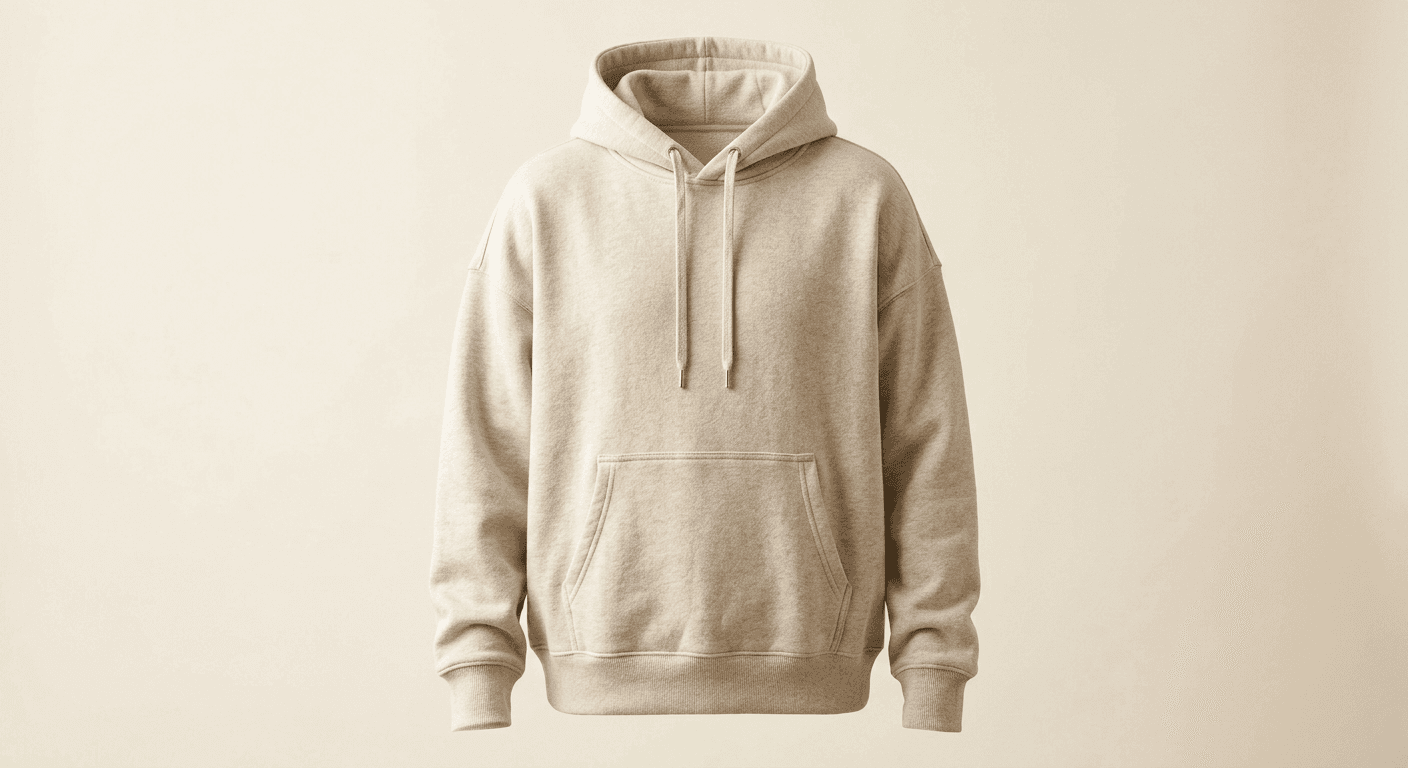
If you already have the fabric, add a photo of it to the mockup and clothink renders the garment in that cloth, matching weave or knit, texture, sheen and colour. It is a quick check that the reference image shows the fabric you are asking the factory to price.
2. BOM — material identity
A costing BOM lists what goes into the garment: main fabric, lining, interlining, trims, thread, labels. Name each line with enough spec to source and price — material type, composition or description, colour/code, supplier ref if you have one. For a zip, that means type, gauge, length, colour, finish, and open- or closed-end construction.
- Categorised rows covering all major materials.
- Spec clear enough to price, not “shell fabric”.
- Open items flagged TBC with the costing assumption you want used, not blank rows.
- Empty qty cells are normal at RFQ. Factories calculate consumption themselves.
Main zip supplier TBC. Quote using a standard size 5 recycled nylon coil zip in matching colour.
3. Size chart — for consumption
At quote stage, the size chart is how the factory calculates fabric consumption. For an early estimate, a clear base-size chart, intended size range, and expected size ratio can be enough. For a firmer quote, provide fully graded POMs across the run, not a chart borrowed from another style.
A buy weighted towards larger sizes consumes more material than one centred on the middle of the range. Ask the factory to state the size ratio or consumption assumptions behind the price. Tolerances help later at sample QC; they are not the headline for a first quote.
- Size range and expected quantity by size or ratio.
- Base size identified; full grade when you need a confirmed quote.
- How to Measure guide once you move towards sampling.
Size chart demo
| Measurement | Grade | Tol. | XS | S | M | L | XL | 2XL |
|---|---|---|---|---|---|---|---|---|
| Chest | +2 | ±1.0 | 82 | 86 | 90 | 94 | 99 | 104 |
| Waist | +2 | ±1.0 | 64 | 68 | 72 | 76 | 81 | 86 |
| Hip | +2 | ±1.0 | 88 | 92 | 96 | 100 | 105 | 110 |
| Shoulder width | +2 | ±0.5 | 36 | 37 | 38 | 39 | 40.5 | 42 |
| Body length | +2 | ±1.0 | 63 | 64 | 65 | 66 | 67 | 68 |
| Sleeve length | +2 | ±0.5 | 58 | 59 | 60 | 61 | 62 | 63 |
4. Flats and visual reference
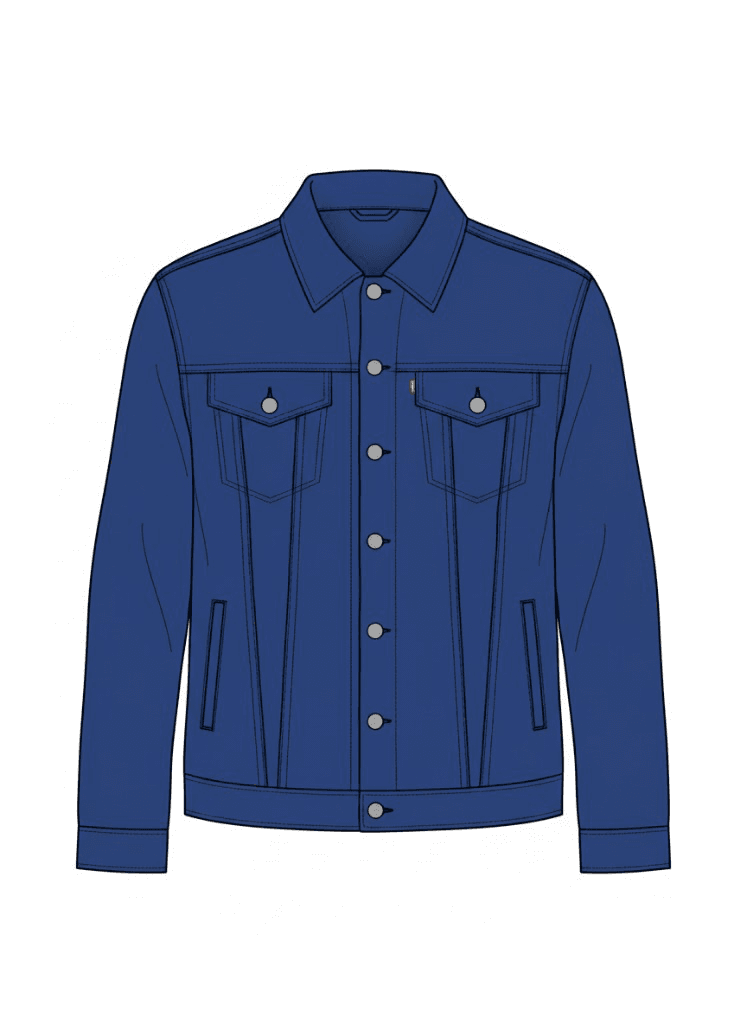
Front and back flats with construction lines visible give the factory a shared visual anchor for panels, pockets, openings, fastenings, and artwork positions. Add detail views where the main flat cannot carry a feature. A mockup can support intent, but it should not replace the flat, and both must show the same design.
CAD analysis demo

5. Construction notes
Construction notes translate the flat into sewing instructions: seam types, stitch density where critical, hem finish, pocket bag construction, and any bonded or taped joins. You do not need a paragraph for every seam, but anything that requires specialist equipment or changes labour meaningfully should be explicit.
A useful construction call out answers five questions:
- Where. A location the factory can find on the flat (side seam, armhole, neckband join, hem), named the same way on every view, with detail views lettered to match.
- Seam and allowance. Single-needle open seam, flatlock, French, bound or lapped seam, plus the seam allowance when it differs from your default.
- Stitch, SPI and thread. Lockstitch, coverstitch, 3- or 4-thread overlock; stitches per inch where looks or strength matter; contrast or heavy-duty thread if the design needs it.
- Edge finish and special operations. Hems, bindings, tape, elastic, bartacks, rivets, bonding or seam taping, and where each applies. “Clean finish” is not enough.
- Fabric handling. One line when the fabric changes how it is sewn, such as “do not stretch neckband during attach”.
Examples you can adapt (swap the numbers and finishes for your fabric):
- Side seam (woven shirt): single-needle open seam, 1 cm seam allowance, 3-thread overlock finish, pressed open, 10–12 SPI, thread to match the shell.
- Hem (jersey tee): coverstitch hem, 2.5 cm turn-back; do not stretch the hem edge while sewing.
- Neckband (rib knit): attach with 4-thread overlock, band stretched evenly to the neckline, rib ratio as per the measurement sheet.
- Bound pocket opening: self-fabric binding, 1 cm finished width, single-needle topstitch 0.2 cm from the edge.
Avoid notes that look busy but decide nothing: “standard construction”, “clean finish throughout”, “as per sample” before any sample is approved, or “factory to advise” on every seam.
6. Cover, packaging, and testing
The cover sheet is housekeeping: brand, style name, style code, season, gender, fit, revision date, colourways being quoted, and sample stage requested. Use a revision number and a controlled filename (for example Brand_StyleCode_RFQ_V1_2026-07-22.pdf). Avoid FINAL, FINAL2, and NEWFINAL.
Packaging does not need to be fully resolved for a first garment estimate, but unusual requirements should be flagged. Ask the factory to separate standard packaging from optional branded packaging so elaborate assumptions are not buried in the unit price. State testing and certification early (restricted substances, colourfastness, children’s product, PPE) and whether those costs sit in the quote or on a separate line.
- Brand, style code, revision date, supplier-facing contact.
- Known label and packaging requirements, or “standard packaging assumed”.
- Testing and compliance called out in the RFQ, not after the price lands.
Give labels and packing their own table, one row per physical item: main label, care and content label, size label, hangtag and fastener, any badge or transfer, polybag, stickers and carton. For each row, give the construction or material, size, colour or reference, supplier part number if you have one, artwork file and revision, placement measured from a fixed point, how it is attached, quantity per garment and any notes. Then state the packing: folded or hung, units per polybag and per carton, and carton marks (style, colourway, size ratio, PO and destination).
Care and content text is a product claim, not decoration: fibre percentages, care symbols and country of origin must match the fabric and the markets you sell in.
7. One controlled PDF — and ask for assumptions
The quotation pack should feel like one product record: cover, flats, colourways, fabric, BOM, measurements, construction, artwork, packaging, testing, revision notes. One PDF beats a folder of mismatched files. Supporting artwork can still attach separately, but the PDF should stand alone.
Even a strong pack has early uncertainty. Ask the factory to record the basis of its price: quantity, size ratio, fabric spec and width, estimated consumption, trim quality, print or wash assumptions, packaging, testing, Incoterm, sample charges, MOQ surcharges, quote validity, and lead time. Without those, a lower unit price may simply mean lighter fabric, a cheaper zip, or a much larger order quantity.
Tech pack workspace
Approved mockup
Style Information
Style code
TP-042-DENIM-JACKET
Style name
Denim Trucker Jacket
Product
Jacket
Season
SS26
Fit
Regular
Factory-ready PDF demo

Technical Specification
Denim Trucker Jacket
SS26 · TP-042-DENIM-JACKET
Created
March 2026
Product type
Jacket
Status
Proto
Version
1.0
Before you send: an eight-point check
Score each block pass or fail before the pack goes out. A fail is a known delay.
- Style identity: name, a style code that stays the same across revisions, season, revision number and date, and a technical contact.
- Flats: front and back at a readable scale, detail call outs, and colourways labelled.
- Measurements: POMs with how to measure each one, the base size, graded sizes if you are quoting a range, tolerances, and one unit throughout.
- Construction: seams, stitches, edge finishes, and special processes such as washes or bonding written as processes.
- BOM: shell, lining and interlining with fibre and weight; trims with size and finish; open items marked TBC with an assumption.
- Artwork and colour: placement measured from clear landmarks, production-resolution files, colour standards or physical swatches, and the print method.
- Labels and packaging: label placements, fibre content and care, and hangtag and polybag if they are part of the quote.
- Assumptions and revision log: open questions stated plainly, what changed since the last revision, and the sample stage you are asking for.
How clothink helps you ship a quote-ready first draft
In clothink tech packs, you can assemble style info, flats, fabric, BOM, size charts, construction notes, and artwork in one tech pack, then export a supplier-facing PDF with version history. AI can draft fabric fields, BOM rows, and construction call outs from garment context. Those outputs are not verified manufacturing data: composition, weight, measurements, and compliance still need a human review before anything goes to a factory.
- Auto-Complete drafts materials and colours (composition, weight, finish) from your mockup and sketch, and writes 'to be confirmed' where it cannot see something, such as a lining.
- Auto-Complete places numbered call outs on your sketch and draws the How to Measure guide on the outline, for you to accept or move.
- Auto-Complete drafts BOM and size chart from existing style context.
- Graded size charts across your size range, so consumption inputs are complete before export.
- Version history keeps one source of truth before you export PDF.
Build a pack factories can quote from
Bring CADs, specs, measurements, and BOM into one clothink tech pack, then export a controlled supplier-facing PDF.
Frequently asked questions
Do I need a complete tech pack to get a factory quote?
You need enough for materials, construction, size range, quantity, and commercial requirements. Some details can stay provisional for an early estimate if costing assumptions are stated clearly. Most factories prefer it in one file rather than scattered attachments. clothink exports the pack as a PDF, or as an Excel workbook laid out like the PDF for factories that work in spreadsheets.
How complete must a BOM be before I request a quote?
Name every major material clearly enough to source and price: shell, lining, interlining, trims, labels. Empty qty cells are normal; factories often calculate consumption themselves. Flag open items as TBC with the assumption you want used, rather than leaving blank rows.
Does a factory need a fully graded size chart to quote?
A full grade is ideal for a precise quotation because it supports consumption across the size range. For an early estimate, some factories can work from a base-size chart, intended size range, and expected size ratio, and should state those assumptions on the quote.
What is the difference between quote-ready and production-ready?
Quote-ready is enough to estimate cost and document assumptions. Production-ready (bulk-ready) has approved measurements, tolerances, materials, colours, construction, labels, packaging, and testing for manufacture.
Can I request a quote from only a sketch or reference image?
You may get a very rough estimate, but it will be assumption-heavy. Clear flats, fabric specs, quantities, and construction produce a quotation you can actually compare.
Should I tell the factory my target price?
A realistic target can help them assess feasibility and propose material or construction alternatives. It should not replace a proper quotation or a cost breakdown.
Can AI write a tech pack a factory can quote from?
AI can accelerate a structured first draft, but it cannot confirm fabric properties, fit, measurements, construction feasibility, or compliance from an image alone. Review every technical field before the pack goes to a manufacturer.
Start on the Free plan: make and edit up to 3 active tech packs with 10 starter tokens, no card needed. When a pack is ready for your factory, unlock it for £15 to download the PDF and Excel, or choose a plan from £19 a month. See clothink pricing.