Product developmentclothink
I Have a Clothing Brand Idea — What Do I Need Before Contacting a Manufacturer?
- Startup brands
Have a clothing brand idea? Do not contact a manufacturer yet
Having the idea for a clothing brand is the easy part.
You might already have the name, logo, Instagram account, moodboard and a dozen designs saved on your phone.
The harder question is:
What does a manufacturer actually need from you before they can make your clothing?
This is where many new clothing founders get stuck.
You do not necessarily need a finished collection, a huge budget or years of fashion experience. But you do need enough information for a manufacturer to understand what you want them to produce.
It also helps to match how ready you are to the kind of factory you approach. Larger manufacturers generally expect a fully formed idea and a tech pack before they will engage seriously. Smaller manufacturers are often happier to talk at an ideas or early-concept stage — though they will still need clear information before they can sample or quote properly.
Before you start emailing factories, here is what you should have prepared.
In this article
- 1. A clear product concept
- 2. Know who you are making it for
- 3. Start with a small number of products
- 4. Create visual references
- 5. Understand that a mock-up is not a production specification
- 6. Have a realistic target price
- 7. Know your initial quantity
- 8. Prepare your tech pack
- 9. Expect the first sample to be part of the process
- 10. Learn enough manufacturing terminology to ask good questions
- 11. Do not choose a manufacturer based only on price
- What do you actually need before your first manufacturer email?
- What if you do not have all of this yet?
- Your clothing brand does not start at production
- Final thoughts
- Frequently asked questions
1. A clear product concept
You do not need every detail figured out. But you should know what you are trying to make.
For example:
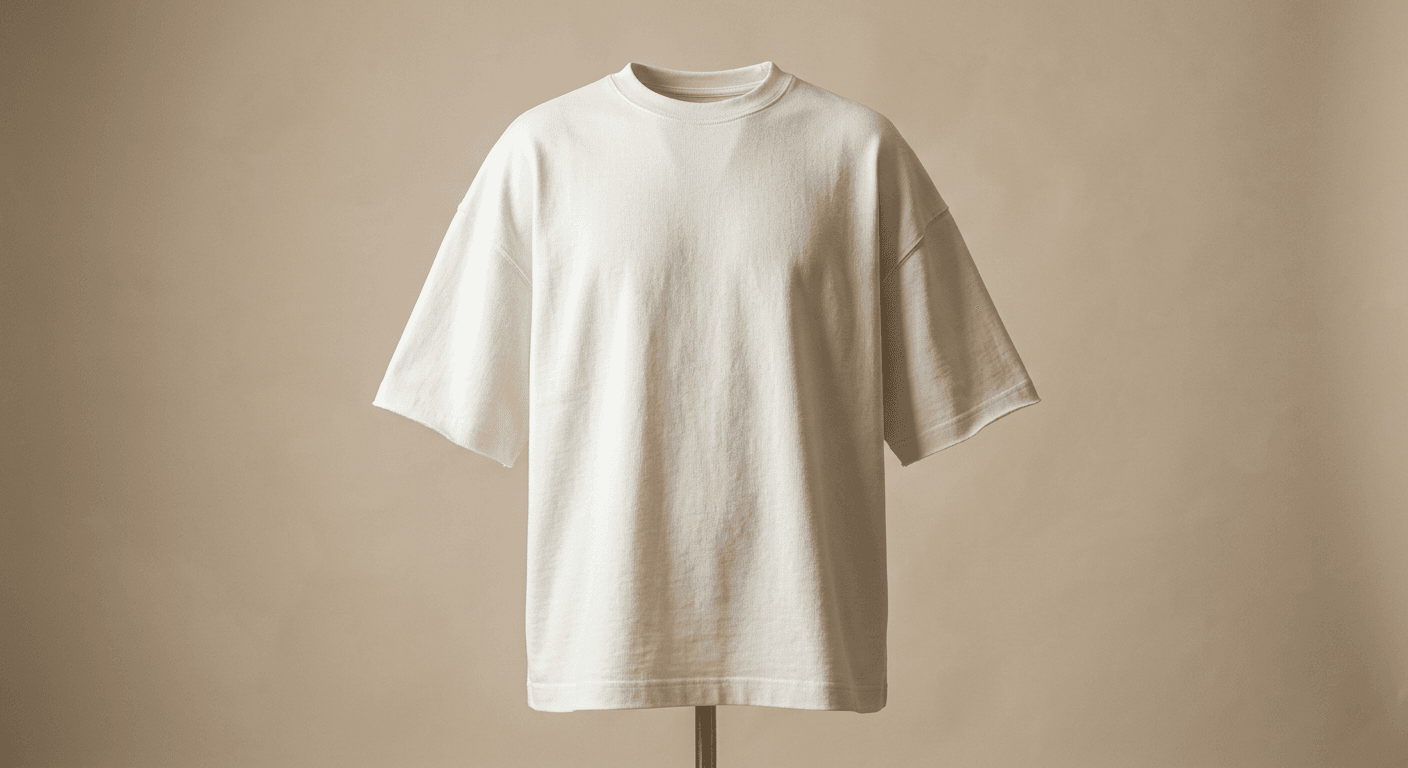
I want to create a heavyweight oversized T-shirt with a boxy fit, dropped shoulders and a small embroidered logo.
That is significantly more useful than:
I want to make premium T-shirts.
The first describes a product. The second describes an ambition.
As a founder, your job at this stage is not to know everything about garment manufacturing. It is to communicate the product clearly enough that the technical details can be developed.
2. Know who you are making it for
Before talking about manufacturing, understand the customer you are designing for.
Ask:
- Who is going to buy this?
- What are they currently wearing?
- What price are they comfortable paying?
- What brands are they already buying?
- What makes your product different?
- Is the product fashion-led, functional, premium, accessible or niche?
This matters because manufacturing decisions ultimately affect your retail price. A heavyweight custom garment with premium trims and complex construction has a very different cost structure from a simple blank garment with a printed logo.
Your product strategy should therefore come before your manufacturing strategy.
3. Start with a small number of products
One of the biggest mistakes new founders make is trying to launch too much. You do not necessarily need 20 styles. You might need three excellent ones.
A focused first collection can make development considerably easier because you can concentrate your budget and attention on getting a small number of products right.
For example:
- Style 01: Oversized T-shirt
- Style 02: Heavyweight hoodie
- Style 03: Relaxed-fit sweatpants
You can learn from those products before expanding the collection.
Your first objective is not to prove that you can design hundreds of products. It is to prove that customers want the products you are making.
For a wider startup playbook, see design and tech pack help for startup clothing brands.
4. Create visual references
Manufacturers cannot read your mind.
If you want a particular fit, construction detail or finish, show examples. Useful references can include:
- Garment photographs
- Existing products
- Technical sketches
- Fabric references
- Colour references
- Artwork
- Screenshots
- Measurements from similar garments
You can even annotate images to explain what you like. For example:
- I like the sleeve length from this garment.
- I want the body to be approximately this oversized.
- Use this pocket shape as a reference.
References help turn an abstract idea into something tangible.

5. Understand that a mock-up is not a production specification
This is an important distinction for new founders.
A Photoshop mock-up can show what you want the finished garment to look like. It does not necessarily tell a manufacturer how to make it.
A mock-up might show:
- Logo placement
- Colours
- Graphics
- General proportions
But it may not specify:
- Exact measurements
- Fabric GSM
- Stitching
- Seam construction
- Tolerances
- Trim specifications
- Label details
- Artwork dimensions
That is where a clothing tech pack becomes important.
The tech pack turns the design concept into production information.
A mock-up helps with visual approval; a tech pack is what production still needs. See What Is an AI Tech Pack? for what that document typically covers.
6. Have a realistic target price
You do not need to know your final manufacturing cost before contacting a factory. But you should understand your target economics.
Consider:
Retail price → Wholesale price → Target manufacturing cost → Other costs → Margin
If you intend to sell a T-shirt for £45, manufacturing it for £30 may leave very little room for packaging, shipping, marketing, payment fees, returns and other expenses.
Your product needs to work commercially, not just creatively. This is one reason founders should think about manufacturing early rather than treating production as something that happens after the branding is finished.
7. Know your initial quantity
Manufacturers will usually want to know how many units you are considering. You do not need to have placed an order. You should, however, have a realistic estimate.
For example:
- First sample: 1–3 units
- Initial production: 100–300 units
- Future production: 500+ units
These numbers will vary significantly depending on the manufacturer, product and production method. The important thing is to communicate your expected scale honestly.
A factory that specialises in large-scale production may not be the right fit for a founder who needs a small initial run.
8. Prepare your tech pack
Once your concept is developed, your tech pack becomes one of the most useful documents you can give a manufacturer.
A typical clothing tech pack can include:
- Technical flats
- Measurement chart
- Point of measure diagram
- Fabric specifications
- Colour references
- Artwork
- Artwork placement
- Stitching details
- Construction information
- Labels
- Trims
- Packaging requirements
- Sample comments
- Revision information
The exact contents depend on the garment. A basic T-shirt will not need the same technical documentation as a multi-panel jacket. But the principle is the same:
Give the manufacturer enough information to understand exactly what you are asking them to make.
That expectation is especially true with larger factories: many will not take a new enquiry seriously without a solid concept and a tech pack they can work from. Smaller manufacturers may start the conversation earlier, but a clear pack still speeds up quoting and sampling once you are ready.
Start with a tech pack brief, then build toward a pack factories can quote from. Avoid common tech pack mistakes that force the factory to guess.
9. Expect the first sample to be part of the process
A common founder mistake is assuming the first sample should be perfect. In reality, sampling is part of product development.
You might discover that:
- The body is too long.
- The sleeve needs to be wider.
- The fabric is too stiff.
- The neckline needs adjusting.
- The embroidery is too large.
- The pocket sits too low.
That is useful information. You can then update the specification and create another sample.
The goal is not necessarily:
Get it perfect on the first attempt.
The goal is:
Make each development round more accurate than the last.
10. Learn enough manufacturing terminology to ask good questions
You do not need to become a garment technologist. But understanding basic terminology will make manufacturer conversations much easier.
Terms worth knowing include:
- GSM
- MOQ
- POM
- Tolerance
- Grading
- Cut and sew
- Seam allowance
- Shrinkage
- Pre-production sample
- Size set
You do not need to use technical terminology to sound impressive. You need to understand what you are agreeing to.
11. Do not choose a manufacturer based only on price
The cheapest quote is not automatically the best quote. Consider:
- Communication — Can they understand your requirements?
- Quality — Can they produce the level of garment you want?
- MOQ — Does their minimum order work for your launch?
- Sampling — Can they support product development?
- Lead time — Can their production schedule work with your launch?
- Specialisation — Do they have experience with the type of garment you are developing?
A manufacturer is a production partner. Choosing one purely because they offer the lowest unit price can create problems later.
What do you actually need before your first manufacturer email?
You do not need a perfect business empire. You need a clear product.
At minimum, try to have:
Product
What exactly are you making?
Customer
Who is it for?
References
What should it look and feel like?
Specifications
What measurements, materials and construction details matter?
Quantities
How many units are you considering?
Budget
What manufacturing cost makes sense for your business?
Technical documentation
Can the manufacturer understand the product without having to guess?
If you can answer those questions, you are in a much stronger position to start the manufacturing conversation. Larger manufacturers will usually expect this level of clarity — and often a tech pack — before they engage. Smaller manufacturers may be happy to talk earlier, while your idea is still forming, but they will still need clearer specs before sampling or quoting seriously.
What if you do not have all of this yet?
That is normal. Most first-time founders do not.
The mistake is thinking you need to have everything perfect before starting. Instead, use the development process to identify what is missing.
You might start with: Idea → References → Design → Tech Pack → Manufacturer Feedback → Sample → Revisions → Production
Each stage makes the next one more precise. The important thing is not to jump directly from an idea to a bulk production order.
Your clothing brand does not start at production
For a founder, it is tempting to think of manufacturing as the final step after branding, marketing and social media. It is actually part of the product strategy.
Your choice of fabric affects your positioning.
Your construction affects your quality.
Your MOQ affects your cash flow.
Your sampling process affects your launch timeline.
Your manufacturing cost affects your retail price.
And your technical specifications affect whether the product that arrives at your door actually resembles the product you designed.
That is why getting the product development process right early can make such a difference.
Final thoughts
You do not need to be an experienced fashion designer to start a clothing brand.
But you do need to become good at turning your ideas into clear instructions.
A manufacturer can produce a garment. They cannot manufacture an idea that has not been properly communicated.
The more clearly you define the product, the easier it becomes to find the right manufacturer, request accurate quotes, develop useful samples and eventually place a production order.
Your first job as a clothing founder is not to know everything. It is to turn the idea in your head into something another person can actually make.
And that is where proper product development — including a well-built clothing tech pack — starts to matter.
How Clothink helps
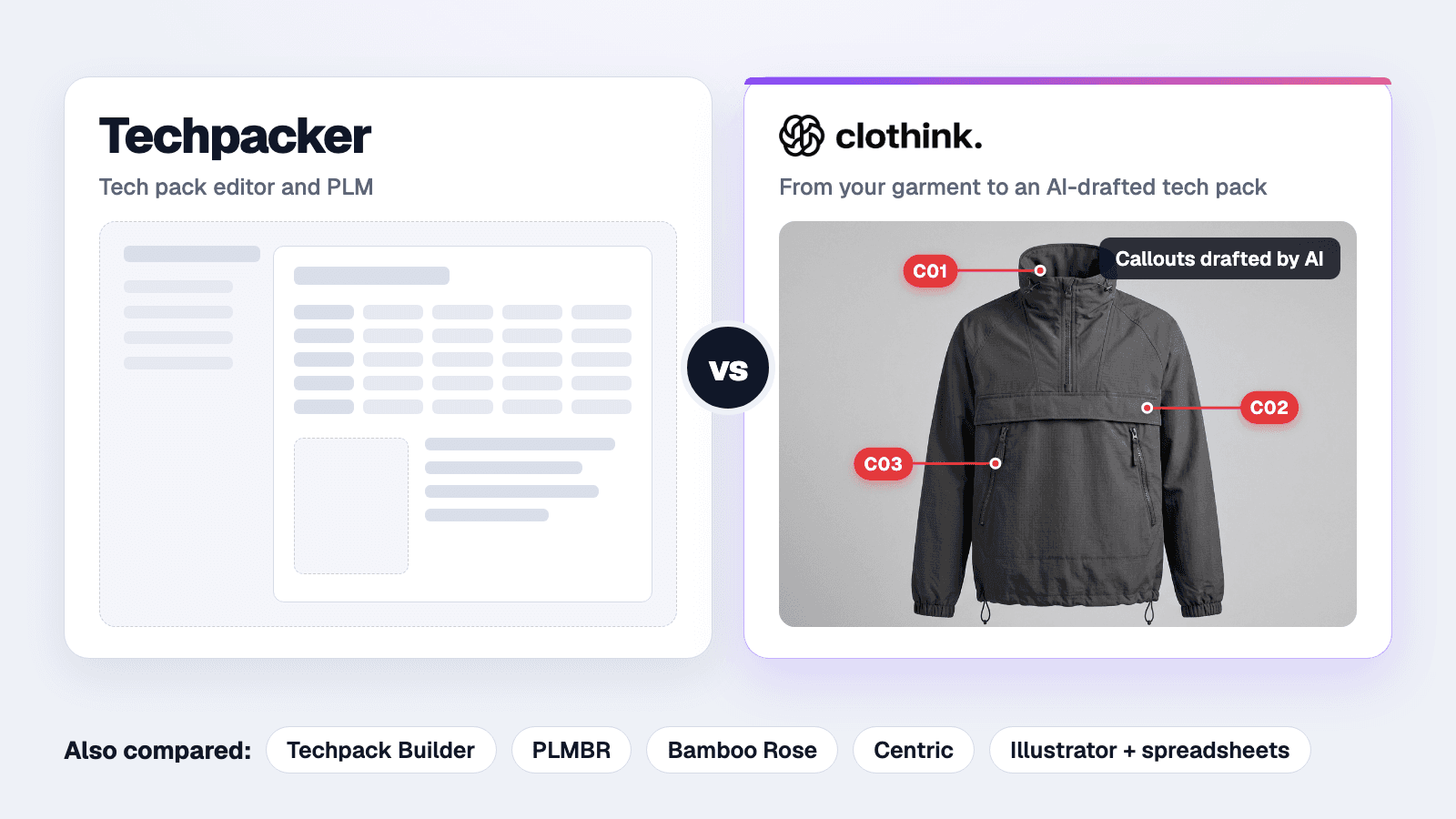
Clothink is an AI-powered workspace for clothing founders. It helps you move from a brand idea to documentation a factory can actually use — coloured and flat sketches for references, photoreal mockups for visual approval, and editable tech packs with measurements, materials and trims (your bill of materials), construction notes and factory PDF export. AI drafts the first version of the tech pack; you review and edit every field before anything goes to a manufacturer.
- AI-powered sketches and mockups so you can show factories what you mean before formal sampling.
- Tech packs drafted by AI, then checked by you — not sent blindly.
- One workspace per style so your latest notes, measurements and files stay together.
- Export a factory-ready PDF when you are ready to email a manufacturer.
From idea to factory-ready specs
Clothink’s AI workspace drafts your sketches, mockups and tech packs — you review everything, then export when you are ready to contact a manufacturer.
Frequently asked questions
What do I need before contacting a clothing manufacturer?
A clear product concept, customer definition, visual references, realistic quantity and budget estimates, and enough technical documentation — ideally a clothing tech pack — that the factory does not have to guess your intent.
How many products should a new clothing brand start with?
Often three strong styles rather than twenty weak ones. A focused first collection concentrates budget and sampling on products you can learn from before you expand.
Do I need a tech pack before emailing a factory?
For a serious sampling conversation, yes — or at least a detailed brief heading toward a full pack. Mock-ups alone rarely carry measurements, fabric GSM, construction and trim detail factories need to quote.
What is the difference between a mock-up and a tech pack?
A mock-up shows what the garment should look like. A tech pack specifies how to make it — measurements, materials, construction, artwork specs and revision history.
What MOQ should I expect for a first production run?
It varies by product and factory. Many founders plan 100–300 units for an initial run after sampling, but MOQs can be higher for custom fabrics or complex construction. Ask early and compare assumptions.
Can I start a clothing brand without fashion experience?
Yes. You do need to learn how to communicate product intent clearly — references, basic manufacturing terms and a tech pack or strong brief — so the factory is not interpreting an vague idea.
Explore Clothink pricing when you are ready to build manufacturer-ready documentation without the agency overhead.